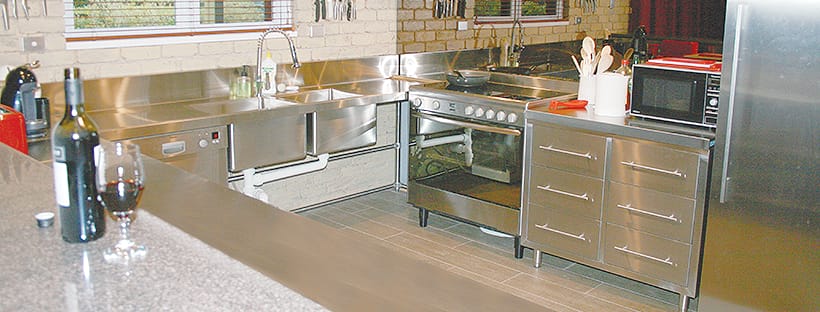

Covid19 has bought many extra restrictions for the hospitality industry. As we return to some level of normalcy within our industry here are a few key points to remember when you are cleaning your stainless steel.
It’s important to clean before disinfecting because organic matter and dirt can reduce the ability of disinfectants to kill germs. A combination of both will be most effective in preventing spread of the COVID-19 virus.
Cleaning and disinfecting are two different processes:
Cleaning means physically removing germs, dirt and organic matter from surfaces.
Disinfecting means using chemicals to kill germs on surfaces.
1. General Cleaning Methods
Mild detergent and hot water are the most effective day to day cleaning method for stainless steel.
Remember to polish or wipe with the grain of your bench top to help diminish marks or scratches.
2. Disinfecting
Only alcohol disinfectants can be used on stainless steel. Alcohol-based disinfecting solutions should be at least 70% alcohol and can be used to clean a variety of surfaces such as things like table surfaces,
light switches, and mobile phones.
When disinfecting, special attention should be given to frequently touched surfaces and objects such as handles and bench edges.
Do Not Use Bleach on Stainless Steel
Harsh bleaches can permanently ruin any stainless steel surface.
Bleach is often a go-to for disinfecting stainless steel appliances. However, this can stain or corrode the material, as well as quaternary ammonium compounds and oxygen bleach. Please check the list of ingredients, to ensure that bleach is not listed as one of the ingredients.
Some General Points to Note
The virus is highly contagious and it is important to make sure that frequently touched objects are cleaned properly to prevent the spread. Frequently touched objects can vary by location, for example, light switches, doorknobs, handrails, kitchen appliances, tables, drawer pulls, sinks, handles, elevator buttons, keys, and remote controls. Your staff should follow existing procedures for using gloves or other personal protective equipment (PPE). Post cleaning, the gloves should be discarded.
Useful further reading; https://www.insider.com/how-to-kill-germs https://www.safeworkaustralia.gov.au/covid-19-information-workplaces/cleaning-prevent-spread-covid-19